

Flat roof materials - which is best?
15/12/2025 00:00:0015/12/2025 00:00:00Flat roof materials - which is best?Bluedrop Services
If your property has a flat or partially flat roof, you're likely aware that regular maintenance is essential for extending its lifespan. Over time, all flat roofs will eventually need to be replaced. While flat roof materials have advanced considerably, choosing the right option can be confusing.
Below, we break down the most common materials, how long you can expect them to last, and how to properly insure your flat roof.

How long does a flat roof last?
Traditionally, flat roofs were built using mineral felt or asphalt, offering a lifespan of around 10 to 15 years. These flat roof materials have gained a poor reputation due to their tendency to leak, particularly when water pools on the surface.
However, with regular maintenance, many flat roofs can last much longer - often between 20 and 30 years.
Modern alternatives like rubber and plastic materials have improved durability. Depending on your choice of material and how long you stay in the property, you might only need to replace your flat roof two or three times in your lifetime.
What are the best materials for a flat roof?
If you want to improve on these traditional options then you may want to consider EDPM or TPO flat roofing options. Both EDPM and TPO are types of rubber which tend to have a much longer lifespan than the traditional materials. TPO is less-widespread and a comparatively new product but is more easily heat-weldable.
There are also the options of Fibreglass, Lead, Copper, and Zinc which are being used more regularly and are all considered much harder wearing.
Here is a review of a few of the more popular options:Felt roofing (torch-on felt)
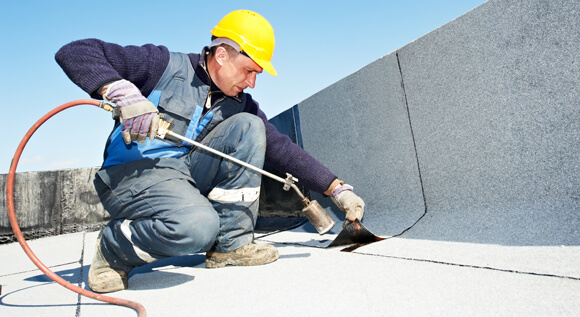
Bitumen felt roofs are applied in a three layer system including a vapour control layer, a reinforced felt layer and cap sheet. These three layers are welded together and hence the material is often called ‘Torch-on felt’.
This type of flat roofing should never be attempted to be fitted through DIY installation due to the danger and expertise required, and you should check that your contractor carries the correct insurance to work with a hot flame. Most felt roofs are guaranteed between 10-20 years, but if treated well and well maintained they can last longer.
Felt roofs are the cheapest option when it comes to flat roof material, but probably not the prettiest. The modern bitumen felt roofs have good expansion and contraction properties, but may become damaged if they experience foot traffic in hot weather or from window cleaners leaning ladders on them in hot weather.Felt roofs are easy to repair, but patches will be visible so for this reason often this roofing material is chosen for unseen and unused areas.
- Lifespan: 10–20 years (longer with good maintenance)
- Cost: Low
- Installation: Installed in three layers - vapour control, reinforced felt, and cap sheet - using a gas torch.
- Maintenance: Easy to patch, but repairs are often visible.
- Best for: Unseen or low-traffic areas (like garages or extensions).
Note: Due to the use of an open flame, always hire a professional installer who carries appropriate insurance.
EPDM Rubber roofing
These rubber roofs can often be installed in one complete layer without the need for joins, depending on the size of the roofing area. EDPM is extremely lightweight, elastic and tough so a well installed rubber roof can be a very good option.
Most EDPM roofs are guaranteed for 30 years upwards meaning they are very hard-wearing and can withstand foot traffic due to the incredible ability for expansion and contraction. Rubber roofs, such as EDPM, are very durable and waterproof when in good condition, however they can be easily damaged or vandalised.
Good installation is also required with EDPM to ensure that you get a pleasing finish around complicated corners and pipes. Repair work is easily done, but will again look patchy.
- Lifespan: 30+ years
- Cost: Medium
- Installation: Can often be fitted in a single sheet without seams; flexible and lightweight.
- Maintenance: Durable and low-maintenance but susceptible to vandalism and sharp objects.
- Best for: Larger roofs with minimal joins; areas with occasional foot traffic.
Note: Proper installation is critical, especially around corners and pipes, to maintain a neat finish and avoid leaks.
TPO Rubber roofing
Thermoplastic polyolefin elastomers (TPOs) are two-component elastomer systems consisting of an elastomer (such as EPDM – Elastometric membranes) finely dispersed in a thermoplastic polyolefin (such as polypropylene) where thermoplastic polyolefin is usually the major component.
The expansion in usage of this material has come from its superior environmental credentials and the fact that it is much more easily heat-weldable than EPDM. Lifetime of this material is thought to be 20 years.
- Lifespan: ~20 years
- Cost: Medium to high
- Installation: Heat-welded seams; offers good durability and environmental benefits.
- Maintenance: Similar to EPDM, but easier to weld and seal.
- Best for: Environmentally-conscious projects or commercial buildings.
Note: TPO is a newer material in the UK market but gaining popularity for its energy efficiency and strength.
Fibreglass roofing (GRP - Glass Reinforced Plastic)
Fibreglass GRP is normally laid in either one or two layers with a joint-less finish and can be made to any colour. Most fibreglass roofs are guaranteed for 25 years but can last much, much longer if well looked after. Fibreglass is the most expensive of the options due to material costs, and although it is not as flexible as rubber it is incredibly resistant to damage and repairs are very easy and almost un-noticeable.
GRP is extremely weatherproof and at little risk of leaking or developing frost damage (GRP is also used on the hulls of some boats to give you an idea of strength). If you can stretch to the extra cost then it is well worth the money in terms of both durability and aesthetics.
- Lifespan: 25+ years (can last much longer with proper care)
- Cost: High
- Installation: Applied in one or two layers, resulting in a seamless, coloured finish.
- Maintenance: Extremely durable, resistant to weather and impact; repairs are discreet.
- Best for: High-visibility roofs where aesthetics and long-term durability are priorities.
Note: Though more expensive upfront, fibreglass offers excellent long-term value and minimal risk of leaks.
How to insure your flat roof
If you do experience problems with your flat roofing, perhaps from leaking or any other form of damage, then you will want to have insured your roof correctly. If your flat roof has not been properly maintained then it will be harder to find an insurer and you will need specialist insurance for a flat roof as you won’t be covered under normal house insurance.
Flat roofs are generally harder to insure due to being prone to weather damage, having a shorter lifespan, and ease of theft.
When insuring a flat roof your insurer will want to know what percentage of your roof is flat, how old it is and when it was last maintained. Do not estimate the size of your flat roof as this is where problems can occur when it comes to claims.Many standard insurance companies will only insure up to a certain fairly low percentage of flat roof so you will probably need to contact a specialist insurance broker.
What Insurers Need to Know:
- Percentage of your roof that is flat
- Age of the flat roof
- Date of last maintenance or inspection
- Flat roof materials used
Tip: Never guess the percentage of your flat roof - insurers use this to assess risk, and inaccuracies can lead to rejected claims.
Ignoring wear and tear of a flat roof is also likely to lead to much bigger problems in the future. If you have a mineral flat roof then it is recommended that this is checked by a professional every two years so that you can keen on top of maintenance and repairs for insurance purposes.
It is important to approach a specialist insurance broker, such as Bluedrop, who can advise you and ensure you are fully covered in the event of any problems.Return to blog menuWant to find out more about Flat Roof Insurance?
Call our friendly team now for the right insurance cover - at the best price
+441489780491
Calls recorded for training and quality.
 Privacy and Cookie Policy